
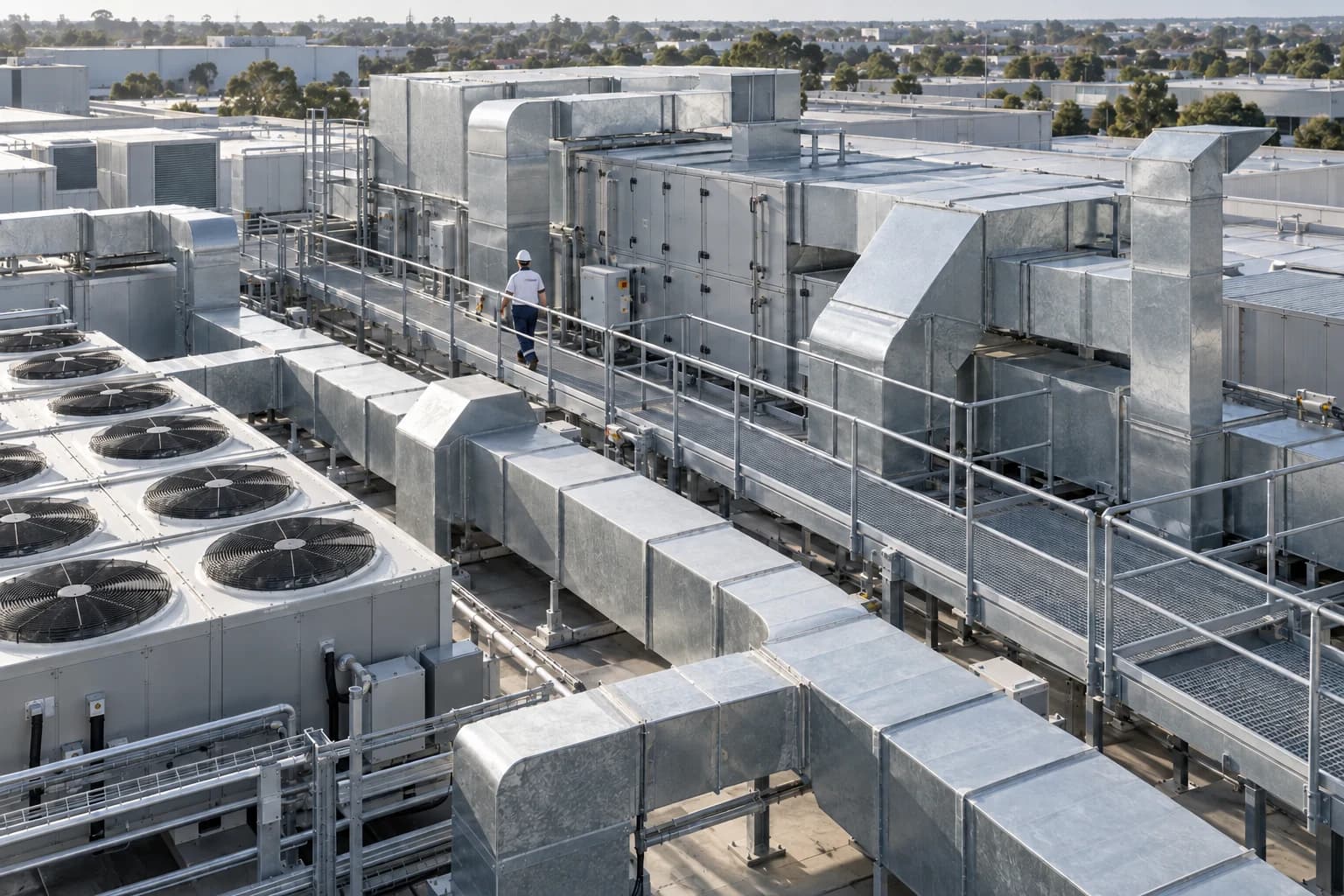
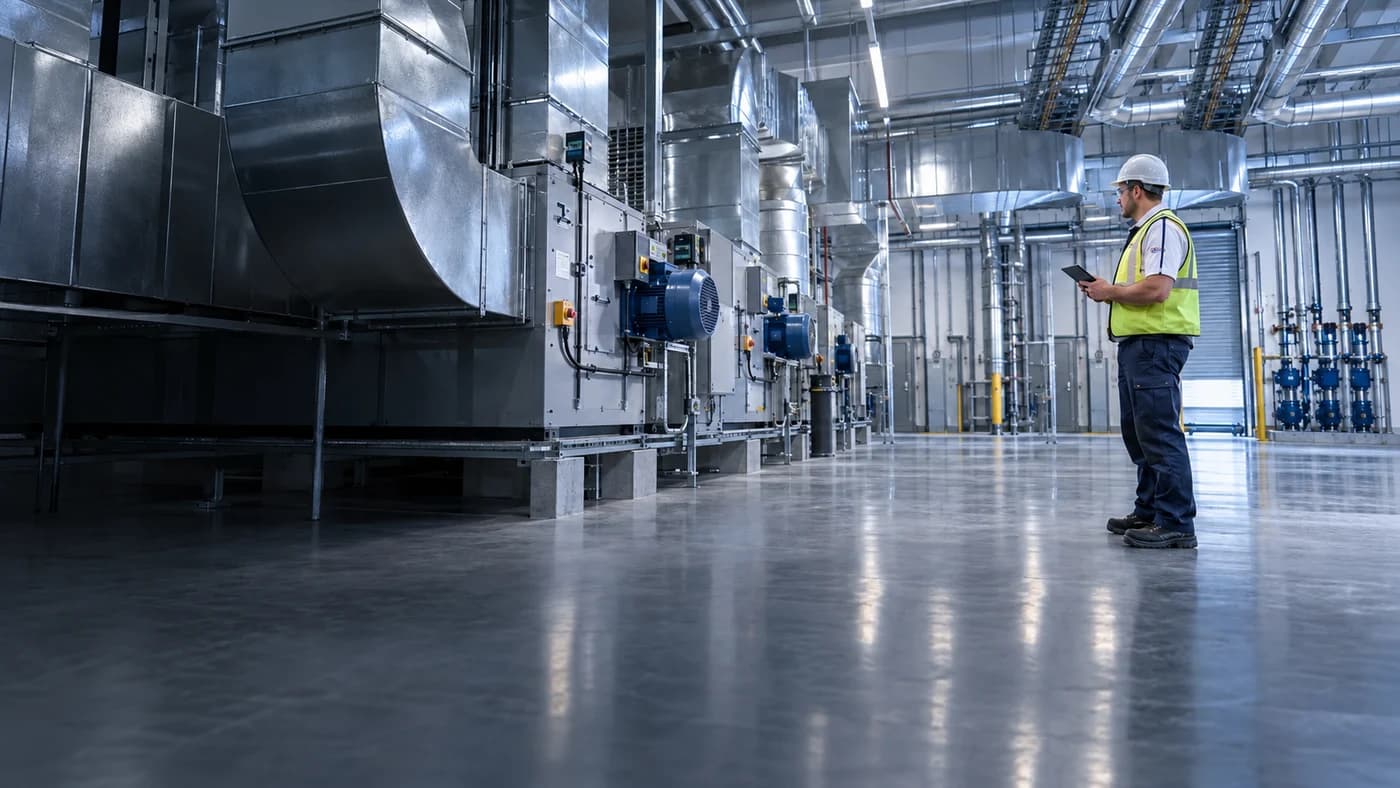
Elevated view of commercial rooftop air-handling units, condenser fans and ventilation ductwork

Air / Commercial building services

Commercial HVAC

Service, repair and renew commercial air-conditioning and ventilation systems with the building's operation in mind.

Air services

Care for the whole HVAC lifecycle.

From planned visits to replacement projects, the work starts with the installed plant and the demands placed on it.

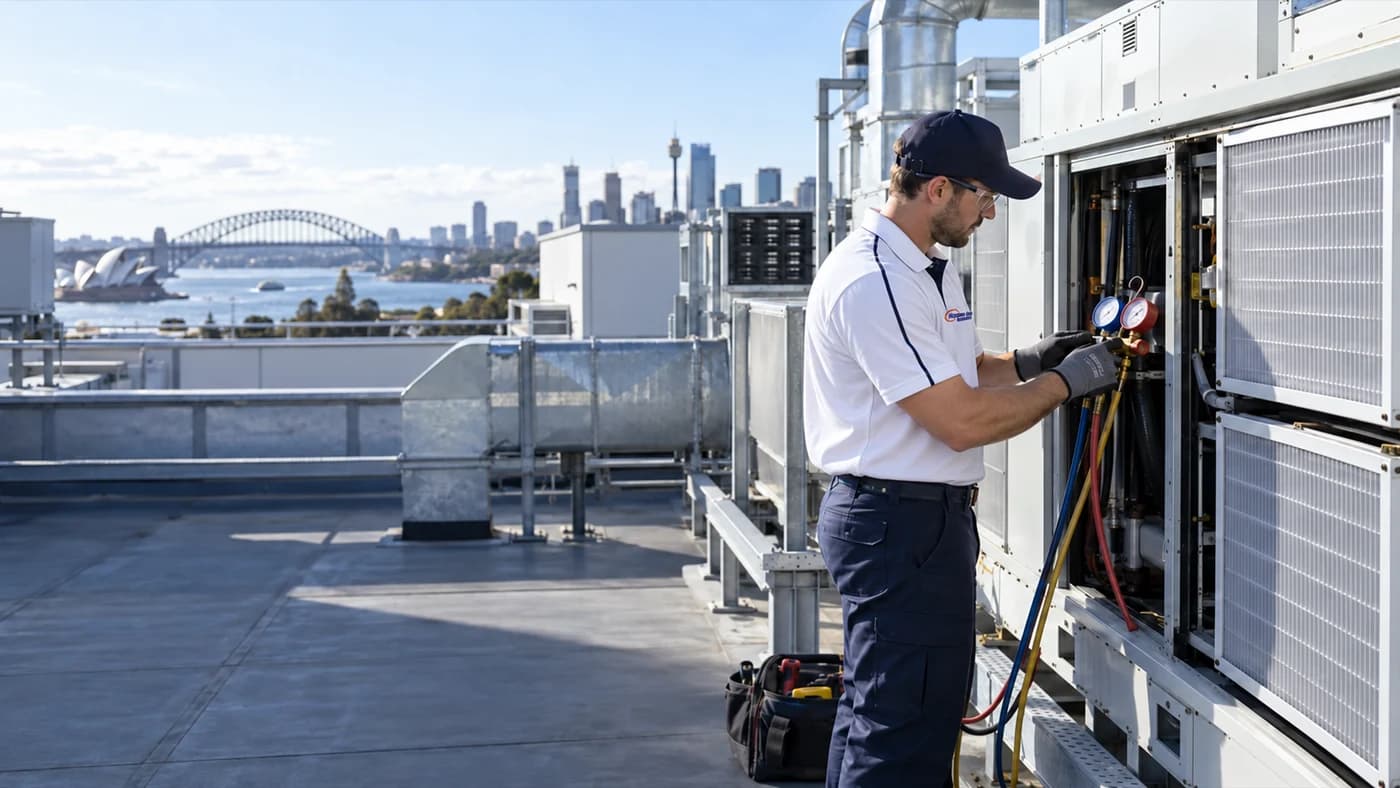
Technician carrying out planned maintenance on rooftop HVAC equipment

Service & maintain

Routine servicing and planned maintenance for commercial air-conditioning and ventilation equipment.

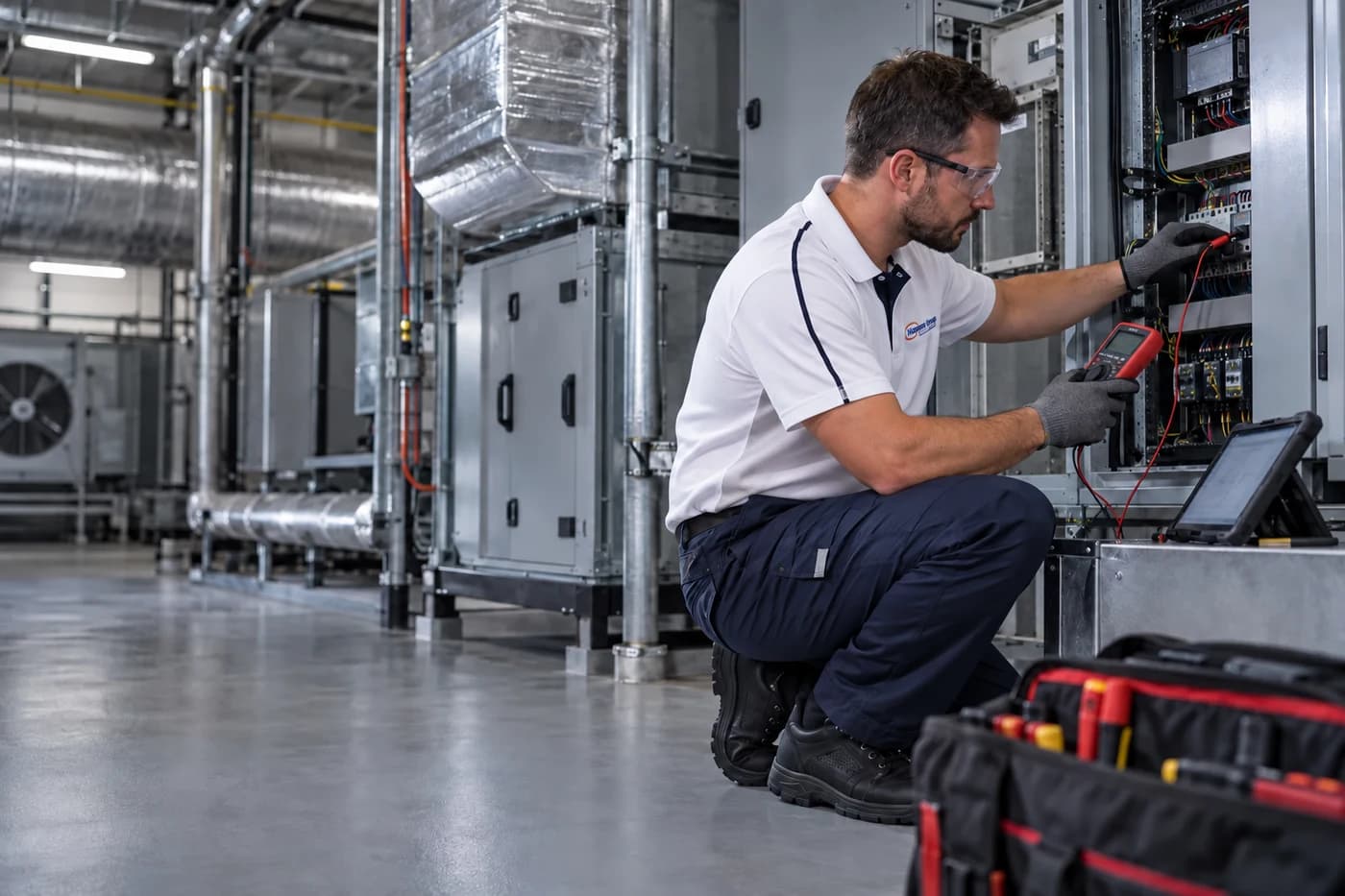
Technician diagnosing a fault in a commercial HVAC control cabinet

Investigate & repair

Fault investigation and practical repairs when systems are not operating as intended.

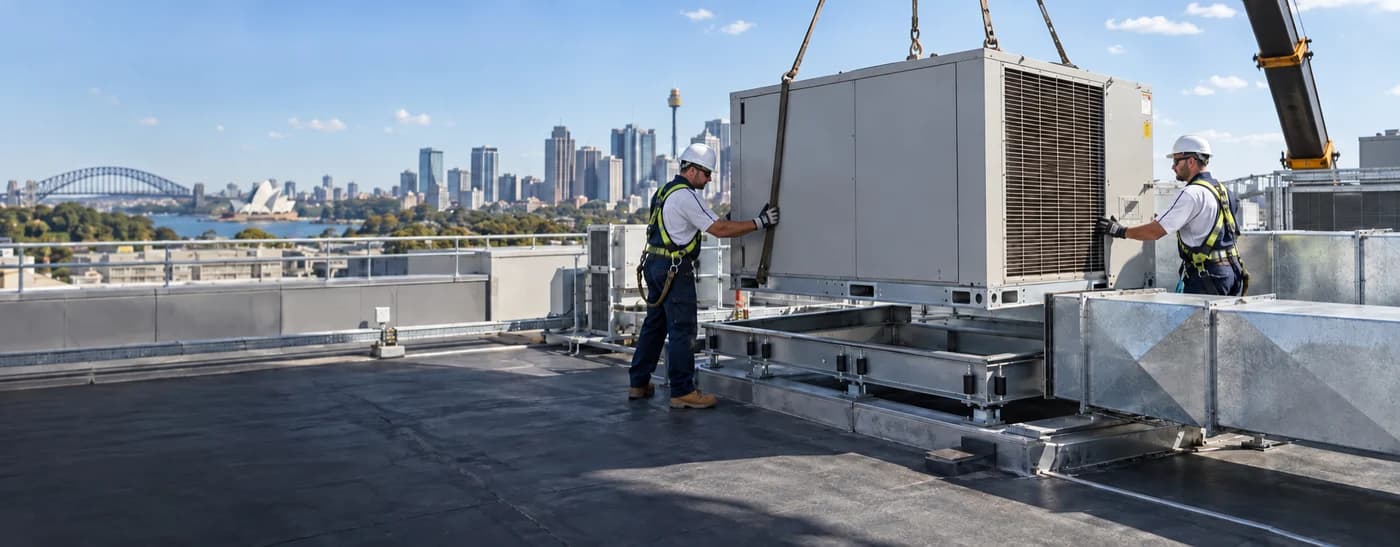
Technicians positioning replacement commercial HVAC equipment on a rooftop

Install & replace

Installation and replacement work considered against existing plant, site needs and ongoing operation.

Technician inspecting upgraded mechanical ventilation equipment

Upgrade & ventilate

Upgrades to commercial HVAC and mechanical ventilation systems as building requirements change.

Commercial HVAC services

Your assets. Our focus.

Our focus is to manage our clients’ assets so they can concentrate on their roles without the added worry of managing comfort conditions, energy requirements and certification of modern commercial buildings and industrial sites.

  • 24-hour, 7-day service
  • Programmed preventative maintenance
  • Repairs to all types of systems
  • Service and installation
  • Lifecycle analysis
  • Energy optimisation
  • Commissioning
  • Chillers
  • Pumps
  • Laser alignment
  • Central plant services
  • Rigging and heavy lifting
  • Thermal camera reporting
  • VRF / VRV servicing
  • Fri3 Oil refrigerant cleaning
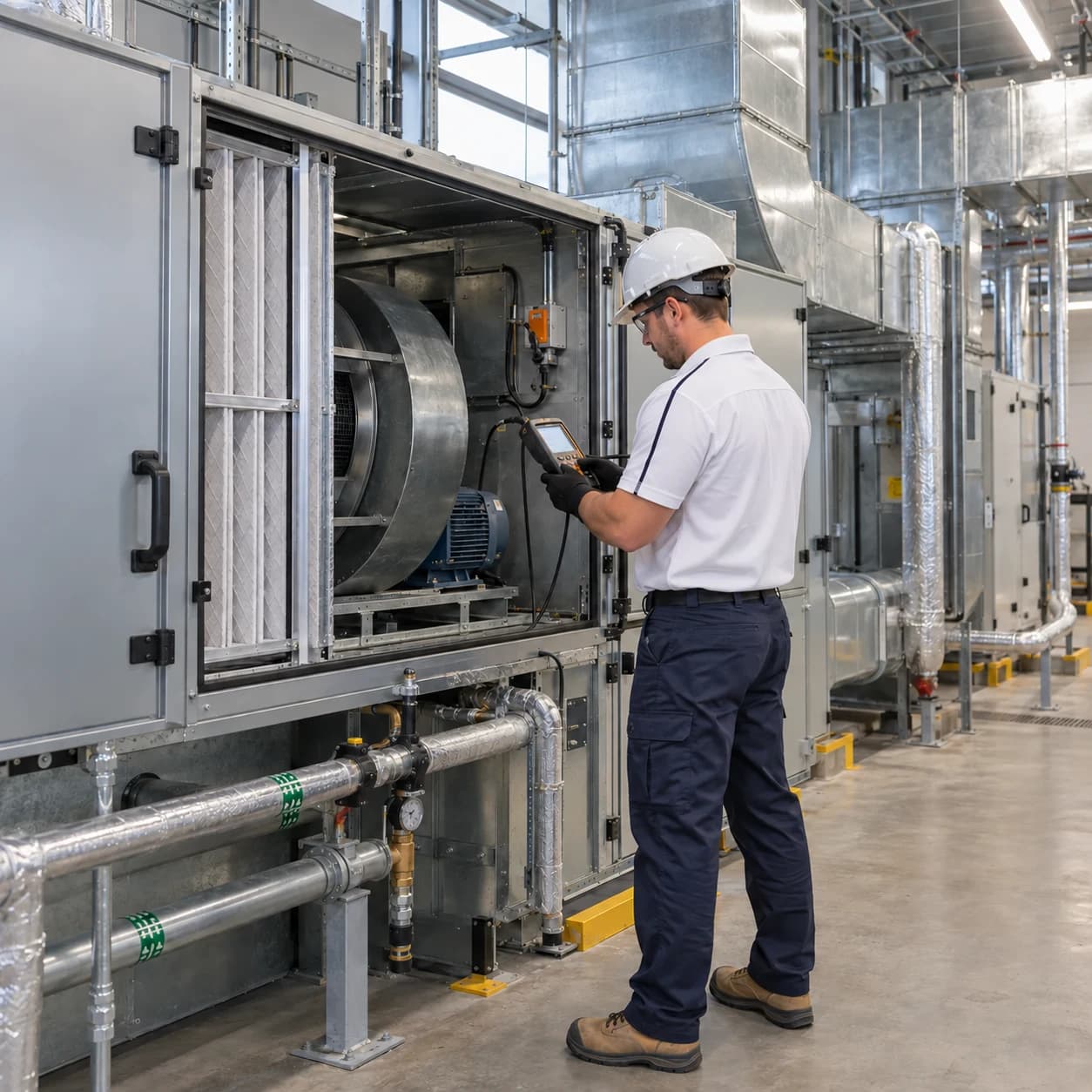
Commercial HVAC technician inspecting an open air-handling unit with diagnostic equipment

In your building

Efficient maintenance for the systems your building depends on.

Air conditioning and ventilation are part of the everyday operation of a commercial building. Proper planned maintenance, practical repairs and common-sense lifecycle analysis help facilities teams manage their buildings cost-effectively and efficiently, with minimal downtime.

How the work is scoped

From plant condition to a practical next step.

A useful HVAC programme begins with the equipment that is actually installed, the way the building is used and the records already available. The scope of a planned visit, a fault call and a condition assessment will differ, but each should leave the facilities team with a clearer decision.

01

Start with the asset list

An office tower, shopping centre and aquatic venue can all need air conditioning, yet their plant and operating pressures are different. A site review identifies the air handlers, condensers, packaged units, fan coils, ventilation fans, pumps or chillers relevant to the request. Equipment location, access, age and known faults help determine the inspection route and the people who need to be involved.

The asset list also prevents a broad phrase such as ‘HVAC maintenance’ from hiding exclusions. A programme can state which units are covered, how often they will be visited, which checks are included and what happens when a defect needs separate investigation or approval. Where drawings or a reliable register are missing, establishing the equipment baseline may be the first useful piece of work.

02

Separate routine service from fault finding

Planned maintenance is organised around recurring inspections, cleaning, operating checks and records suited to the installed plant. A fault response starts with a reported symptom and asks what can be confirmed safely at that time. A warm zone may involve the unit, its filters, refrigerant circuit, controls, airflow or a combination. The service history and current operating state help narrow the investigation.

A technician may be able to restore operation during a visit, or may need parts, access, specialist support or a further test. The important handover is a clear record of what was observed, what was done and what remains open. A recommendation to repair or replace is a proposed next action until the work has been approved and completed.

03

Know what a condition report can show

A condition assessment gives an owner or facilities manager a structured view of the plant rather than a simple pass or fail. Assessments recorded in our service software describe the equipment inspected, visible condition, operating observations and specific issues such as filters, drains, vibration or condenser faults. Photographs and asset references make later conversations about priorities more precise.

The report will also say what could not be established. Weather, an existing fault, unavailable controls access or an isolated unit can limit performance testing on the day. Those limits matter when deciding whether to maintain, investigate further, repair or plan replacement. The report should distinguish an observed condition from a suspected cause and from a measured performance result.

04

Plan around an operating building

Commercial plant serves people who may still be working, shopping or using the building while maintenance takes place. Site access, permits, isolation points and any interruption to cooling or ventilation need to be discussed before the work is scheduled. The plan may also depend on roof access, tenancy hours, the presence of other contractors and the way a system serves several zones.

For larger work, a project WHS and operation plan needs to be created and signed off. The technical scope may involve traffic control, helicopter lifting of HVAC equipment, exclusion zones, rigging and crane access, major electrical shutdowns and downtime for the occupants of the building.

05

Use findings to choose repair or renewal

Replacement is not the automatic answer to an ageing unit. The decision can weigh the actual fault, repeated service issues, parts availability, expected remaining life, building use and the effect of an outage. A targeted repair may be sensible where the surrounding plant is sound; a broader upgrade may be easier to justify when several connected components are failing or difficult to maintain.

Planning the work

Questions worth answering early.

Before requesting a visit or proposal, identify the operating impact, who can arrange access and the decision the work needs to support.

01

Is this a breakdown or planned work?

For an urgent loss of service, call Noppen directly and explain which areas are affected and whether the building remains operational. For planned work, describe the maintenance, investigation or upgrade decision you need to make.

02

Who can arrange access and approve an interruption?

Identify the site contact, plant-room or roof access requirements, tenancy restrictions and any proposed outage window. These details help the team plan a visit or changeover around the building's operation.

03

What should the initial scope make clear?

Share an asset list, recent service report or fault history if available. Ask the proposal to identify the equipment covered, intended checks or deliverables, known exclusions and which findings would need separate approval.

Work with Noppen

Discuss your air requirements.

Tell us about your site, installed systems and priorities. We will discuss the required scope and the right next step.